Debt and Equity IR, what we can learn from each other – Two Sides, One Story
We are in a time of uncertainty, from macroeconomic volatility, geopolitical shifts, and climate change to regulatory changes, cybersecurity threats, and public health emergencies. And so more more risks. Understanding and managing those risks may also unlocks opportunities to explore new markets, capture share from less agile competitors, make strategic acquisitions, and build trust amongst stakeholders. .
Simona D’Agostino Reuter, HEAR-it, Founder
In a global financial landscape shaken by geopolitical uncertainties and mixed macroeconomic data from the United States, a significant shift in investor preferences is taking shape. Europe, long regarded as the “younger cousin” of U.S. financial markets, is seeing its investment profile reassessed, emerging as an alternative for diversification and a potential safe haven as Johann Plé, Senior Portfolio Manager at AXA IM explains.
To respond to critical vulnerabilities and disruptions, companies should address immediate risks and gaps across all dimensions of risk management: Operational Risk, Credit Risk, Insurance & Underwriting Risk, Trading & Balance Sheet Risk, Regulatory Compliance.
Global debt, encompassing both public and private debt, has reached a staggering $324 trillion by the first/second quarters of 2025, driven by factors like fiscal stimulus and high interest rates. Public debt ratios are also on the rise, potentially reaching 100% of global GDP by the end of the decade, with significant refinancing risks as a large amount of debt is set to mature in the next few years.
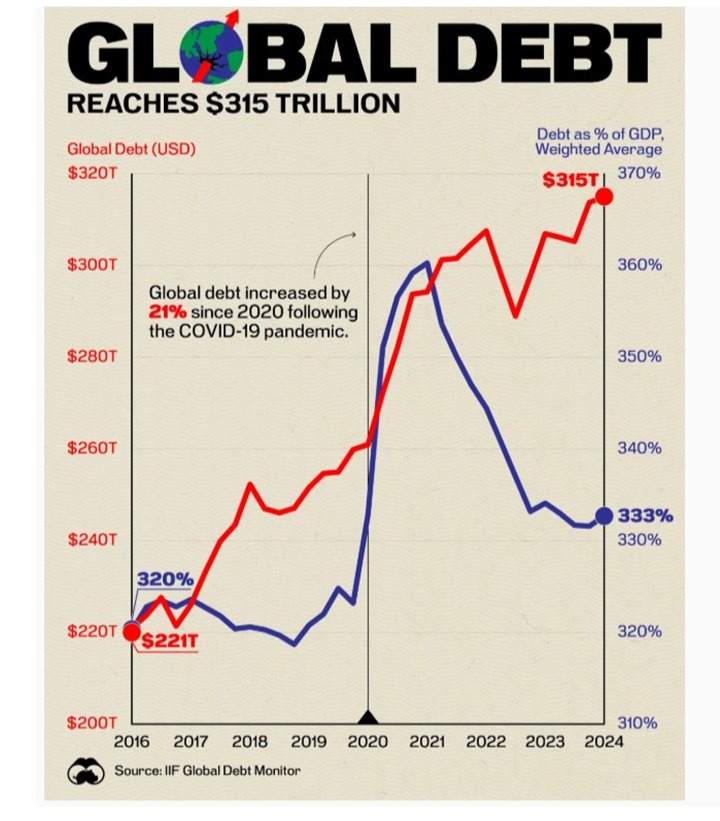
A significant portion of sovereign and corporate debt is set to mature in the coming years, potentially leading to higher refinancing costs and liquidity issues.
- Geoeconomic Uncertainty: Increased trade tensions and geopolitical risks can further exacerbate debt problems through higher government expenditures and weakened growth prospects.
- Fiscal Sustainability: The rising debt burden raises concerns about long-term fiscal sustainability and the ability of countries to manage their finances.
- Disparities: Developing countries face higher borrowing costs and disproportionately heavy external debt burdens, straining their budgets.
Debt funds or equity funds, which one is better in 2026
In the past years, debt funds have delivered stable returns while most equity funds struggled due to market volatility. But, over the long term, equity funds have historically offered higher growth.
Debt and Equity IR: What We Can Learn from Each Other – Two Sides, One Story: Debt and Equity in Investor Relations
Investor relations is often seen as a split discipline – on one side are equity investors focused on growth and returns, and on the other, debt investors prioritising stability and risk management. While these audiences do have different objectives, they share a common reliance on clear and transparent strategic Communication.
Yet, in many companies – and from my own first-hand experience working across both equity and debt IR – it is the debt side that has traditionally taken a back seat. Often managed as part of the treasury function, and on a more reactive basis, debt IR has long been viewed as a ‘nice to have’, rather than a business priority. This perspective, however, is changing.
As debt investors seek deeper engagement and companies recognise the benefits of amore integrated approach, IR itself is evolving.
Understanding the investor mindset Understanding the investor mindset, and the nuanced differences between debt and equity investors, is essential to shaping effective engagement strategies with these two groups.
Equity investors seek potential, focusing on growth, profitability, and capital distribution, with a higher rate of return on investment always top of mind – ‘sell the dream’, as they say. They are typically comfortable with some degree of risk and volatility, provided there is a compelling long-term vision for the business.
Debt investors, however, have a different perspective. They prioritise a steady, risk-adjusted yield. For them, risk mitigation is key, and financial discipline is non-negotiable. Their primary concern is a company’s ability to generate stable cash flows and meet its debt obligations – precisely how that is achieved often comes secondary. These differing priorities highlight the importance of tailoring your communication – one size definitely does not fit all. By recognising and adjusting for these nuances it can lead to more productive and targeted interactions with both investor groups.
The role of disclosure and communication
Many of us will be used to the steady rhythm of equity IR – earnings calls, investor days and a constant flow of interactions with sell-side analysts eager to dissect forward guidance.
The focus is on telling a compelling story: Where is the company headed? What will drive future value? How does it plan to outperform competitors? Disclosures in this space aremany and often and are designed to reinforce confidence in the long-term growth potential of the business.
Debt IR, by contrast, tends to be more event-driven, although should never be purely reactive. While disclosures in this area place greater emphasis on capital requirements, balance sheet strength and cash flow, investors and analysts will still need insight into the growth trajectory of the business.
As with equity IR, relationship building is key. In particular, developing strong ties with credit rating agencies as their assessments can profoundly influence market perceptions and cost of capital.

Another area for improvement is investor relations websites.
Debt IR pages are often less comprehensive and informative than their equity counterparts. In companies with both listed debt and equity, web sections frequently lack integration, with debt-related content buried behind multiple clicks and harder to access.
A more cohesive approach better reflects the needs of today. While some companies are beginning to incorporate debt IR language into key sections such as the investment case, it remains the exception and not the norm.
A strong investment case should address not only equity focused themes but also debt-relevant considerations like the company’s capital allocation policy – ensuring the messaging is relevant for all investor audiences. A more strategic approach Ultimately, all investors seek to make informed decisions, yet debt and equity IR have long operated in silos.
Nevertheless,companies are increasingly recognising the need for a more unified and strategic approach – one that ensures consistency in messaging across the capital structure. A company’s strategic vision, financial resilience, and longterm growth prospects are just as relevant to debt investors as they are to equity holders, and a well-balanced IR strategy plays a crucial role in reinforcing trust and market stability.
“Debt and equity IR are not opposing forces, they are two sides of the same financial coin”