

A well run Debt IR function and the integration with ESG factors
Simona D’Agostino Reuter, HEAR-it, Founder
The steady trend of new 2026 bond issuances has continued, despite market volatility still linked to international uncertainties and the issues between Trump and European leaders over tariffs and Greenland. This has kept investors on edge for a few days, before sentiment was quite reassured by some developments at the Davos meetings.
The need for more investment can push deficits and create divergences between countries with different fiscal space. On the equity market, the concentration of valuations on the US may encourage a rebalancing towards Europe and the rest of the world.
Going back to our main topic..
As we know companies finance themselves with both debt and equity. When a company funds itself by means of, for instance, syndicated loans from banks or through bonds, the focus and interest of these stakeholders will be slightly different than those of the shareholders of the company.
Debt IR therefore focuses on the debt service capacity of the company predominantly. Debt IR (generally together with Treasury) deal with credit rating agencies. Companies can also opt to go directly to the markets to attract funding, rather than to banks, as it’s a deeper pool of capital; and generally companies can borrow on better terms.
Some examples of Debt IR best practice
- Integrated IR messaging
- Ensure consistency of messaging to maintain credibility and align communication across the capital structure
- IR website
- A dedicated debt IR section with information on outstanding debt, credit ratings, bondholder materials, and key metrics
- Relationship building
- Engagement with debt investors should not be purely eventdriven. Regular touchpoints help reinforce transparency and trust
- Rating agency engagement
- Ensure credit rating agencies fully understand the company’s business model, risk management, and strategic outlook.
- Investor targeting
- Understanding your ownership base is crucial and debt IR teams should directly engage existing and potential bondholders.
IR (both equity and debt) clearly has financial goals related to a fair valuation. There are also broader reputational benefits of an effective IR programme, which are set out below.
The simplest way of achieving this is for one team to be tasked with producing the core investment message. This material will then be used as the key building block for all communication with key investor groups, especially:
- Institutional equity investors
- Institutional debt investors
- Fixed-income or equity analysts (buy or sell-side)
- Retail equity or bond investors
- Employee shareholders
- Bank lenders
- Commercial paper investors
- Financial journalists; and
- Rating agencies.
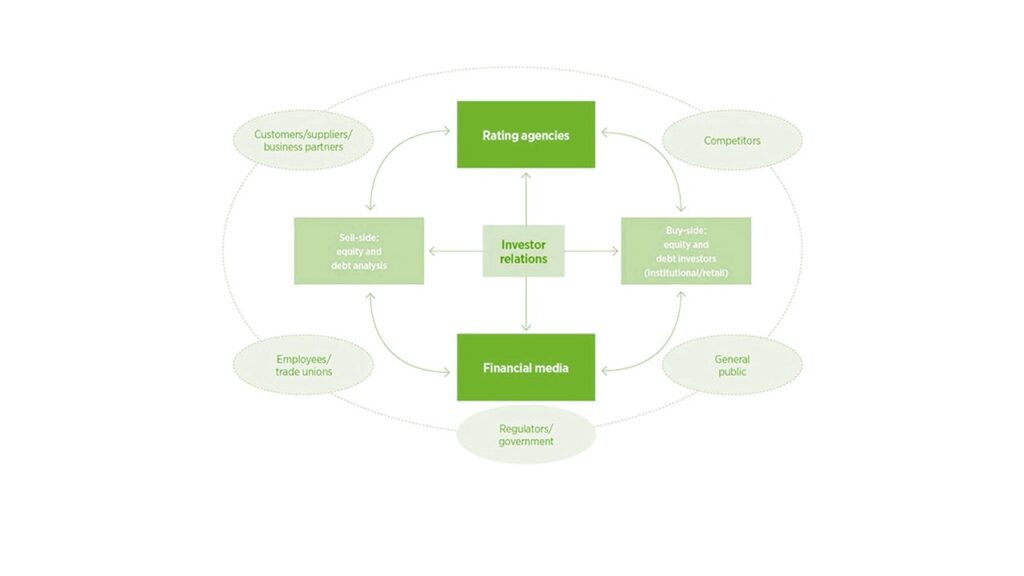
The IR function is ideally positioned to take on the task of crafting the corporate investment case. This also serves an important compliance requirement helping to ensure proper disclosure, in particular around sensitive topics, such as corporate outlook.
A well run Debt IR function and the integration with ESG factors
How ESG analysis and ESG ratings are integrated into credit research as well as into equity analysis.
ESG factors can affect borrowers’ cash flows and IR function as the key point of contact
- ESG issues impact the sovereign issuer’s capacity and willingness to meet financial commitments. Credit rating agencies are consistently considering ESG factors in ratings and assessments.
- By now, several credit rating agencies, including Fitch, Moody’s and S&P Global Ratings have signed on to the UN PRI Statement on ESG in Credit Risk and Ratings, which recognizes that ESG factors can affect borrowers’ cash flows and the likelihood that they will default on their debt obligations.
- By signing the ESG in credit risk and ratings statement, credit rating agencies and fixed income investors commit to incorporating ESG into credit ratings and analysis in a systematic and transparent way.
- ESG factors are therefore important elements in assessing the creditworthiness of borrowers. For corporates, concerns such as stuck assets linked to climate change, labour relations challenges or lack of transparency around accounting practices can cause unexpected losses, expenditure, inefficiencies, litigation, regulatory pressure and reputational impacts.
How investors support this vision
The investors listed are all signatories to the six UN-supported Principles for Responsible Investment. In signing the Principles, the investors listed below affirm their commitment to:
- Incorporate ESG factors into investment analysis and decision-making processes;
- Seek appropriate disclosure on ESG issues by investee entities;
- Report on activities and progress towards implementing responsible investment.
Specifically, as fixed income investors, and as the primary users of credit ratings, the signatories of this statement will support formal integration of ESG factors into ratings. This helps ensure ESG risks are appropriately addressed in investment decision making, which will increase investor confidence in the quality and utility of those ratings.
They also reported that more investors want to know about their plans for issuing thematic bonds (green, blue, sustainable or sustainability-linked bond) than other topics. And yet, the majority of debt managers have not made any changes in their funding or investor engagement strategies to capitalize on investor interests.
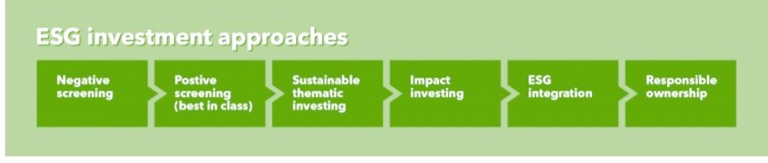
There are many ways to incorporate ESG into investment decisions. The main applications tend to be ethical/values-based investing, integrated ESG and sustainable/impact investing. In ethical investing managers employ a negative screen approach to generate ‘ethical or moral returns’ and avoid controversial ‘sin’ sectors. While negative screening is very straightforward to implement and has historically been used, now more investors are also aiming to apply ESG in order to take advantage of opportunities and select sectors and companies based on their positive ESG performance. This leads to a more holistic ESG integration that is better placed to maximise risk-adjusted returns.
IN CONCLUSION
The concept of ESG analysis has evolved over the years and is becoming integral to fundamental credit research.The Corporate Credit Team believes that rigorous application of ESG analysis can improve risk-adjusted returns.
ESG considerations enhance risk-adjusted return by reducing investment risk and creating investment value. Several investors have more faith in a well-run and responsible company that cares about its people, customers and the environment, which in the end may imply to show a greater level of resilience and outperform its peers than one that does not.
In the end, ESG analysis can provide valuable insights about factors that can have a significant impact on the financial metrics of a company and therefore better inform our investment decisions.